



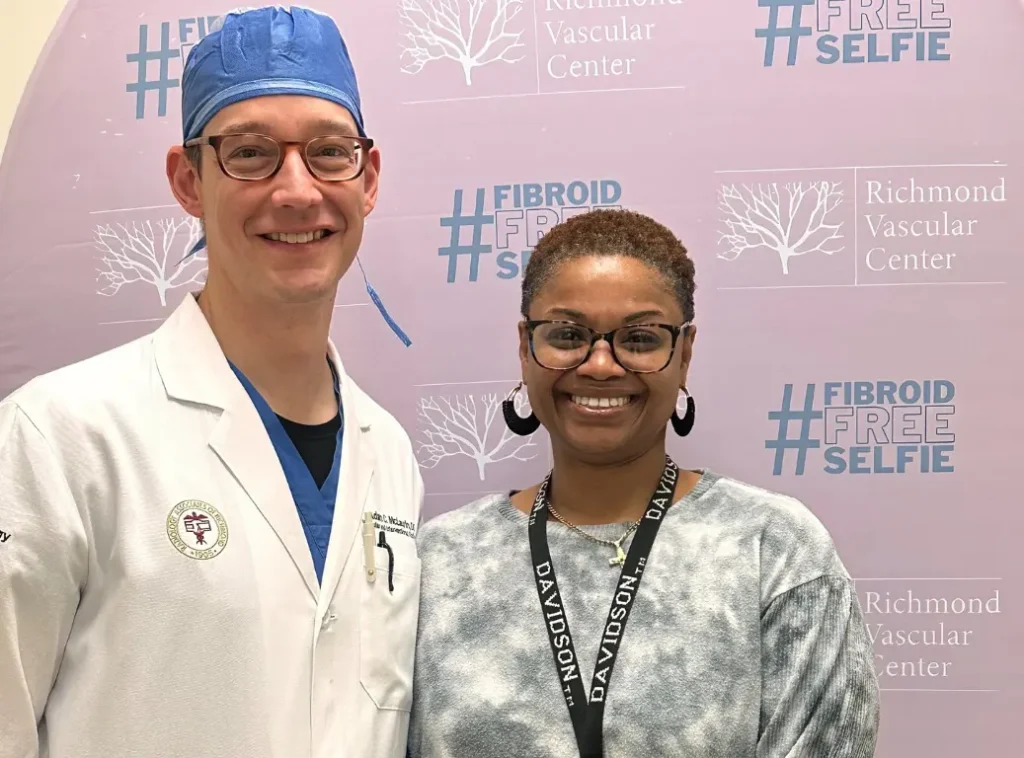
She Chose UFE
And Got Her Joy Back.
What to Know about UFE
Fibroids are the most frequently seen tumors of the female reproductive system. Fibroids are firm, compact tumors that are made of smooth muscle cells and fibrous connective tissue that develop in the uterus.
In more than 99 percent of the fibroid cases, the tumors are benign (non-cancerous). These tumors are not associated with cancer and do not increase a woman’s risk for uterine cancer. They may range in size, from the size of a pea to the size of a softball or small grapefruit.
Uterine Fibroid Embolization (UFE) is a non-surgical, minimally invasive procedure that’s covered by insurance, and it’s more than 90% effective.
Know the Signs
Many women who have fibroids don’t have any symptoms. In those that do, symptoms can be influenced by the location, size and number of fibroids. In women who have symptoms, the most common symptoms of uterine fibroids include:
- Heavy menstrual bleeding
- Menstrual periods lasting more than a week
- Pelvic pressure or pain
- Frequent urination
- Difficulty emptying the bladder
- Constipation
- Backache or leg pains

Diagnosis
Uterine fibroids are diagnosed by pelvic exam and even more commonly by ultrasound. Often, a pelvic mass cannot be determined to be a fibroid on pelvic exam alone, and ultrasound is very helpful in differentiating it from other conditions such as ovarian tumors. MRI and CT can also play a role in diagnosing fibroids. If your doctor suspects you have symptomatic fibroids, they may send you to consult with one of our physicians, who specializes in the treatment of uterine fibroids, called an Interventional Radiologist (IR).
Treatment
There are many treatment options for uterine fibroids and deciding which is best for you can be overwhelming. But the decision is yours to make. That’s why our staff will make sure to educate you on the pros and cons of each procedure and teach you the facts about different treatment options. Our physicians are confident you will be able to make an informed choice after consulting at our center.
One option is a procedure called UFE, also known as uterine fibroid embolization. UFE offers women the opportunity to treat their fibroids while also preserving their uterus. The procedure begins with either a small nick in the skin at the wrist or groin area that is first numbed with local anesthetic. This nick in the skin provides the Interventional Radiologist (IR) with access to arteries that feed the fibroids. Using specialized x-ray equipment, the IR passes a catheter (small tube) into the incision to the uterine artery, and guides it near the location of the fibroid tumor.
When the IR has reached the location of the fibroids, embolic material (small spheres) is injected through the catheter and into the blood vessels feeding the fibroid, depriving the fibroids of oxygenated blood. The oxygen deprivation results in the fibroids shrinking. The IR repeats this procedure on the other side if necessary and proceeds to remove the catheter.
The procedure is done safely and effectively in our outpatient center. The entire procedure typically lasts less than one hour, and you are generally discharged after a short recovery time.
Benefits of Uterine Fibroid Embolization
- Preservation of the uterus
- Decrease in heavy menstrual bleeding from symptomatic fibroids
- Decrease in pelvic pain and/or pressure
- Virtually no blood loss
- Performed as an outpatient procedure; no hospital stay
- Shorter recovery time; faster return to work (2 weeks)
- Safe procedure that involves minimal risk and fewer complications after 30 days when compared to having a hysterectomy
- Overall, significant improvement in patient’s physical and emotional well-being
- Covered by most insurance companies


Are you a candidate? Take the Quiz Today!
Discover if Uterine Fibroid Embolization (UFE) is the right choice for you by taking our quick and informative 5-question quiz. This simple assessment will help you understand if UFE can provide relief from heavy bleeding, cramping, and other fibroid-related symptoms, allowing you to regain control of your well-being. Start your journey toward a happier, healthier life by clicking below to take the quiz now.
Why RVC for your UFE?
Hospitals are busy, unpredictable environments with long waits and multiple handoffs. At RVC, your entire visit from consultation to procedure to follow-up is handled by a small, highly specialized team that knows you and your story.
Hospital based practices compete with emergencies and inpatient cases, which often means rescheduling or long wait times, which is frustrating for both, the patient and the provider. RVC runs on a fixed outpatient schedule, so your UFE consultation or procedure happens on time and without the stress of a shifting hospital queue.
We offer the same high-quality imaging technology as hospitals (like a fixed angio unit) but at a lower overall cost to patients and insurers. The setting is purpose-built for outpatient embolization, and is efficient and safe.
At RVC, UFE is not one of many procedures in a large hospital rotation. You’re treated by Dr. Strife or Dr. McLaurin, expert Interventional Radiologists who perform UFE daily, backed by nurses and technologists who specialize in fibroid and adenomyosis care.
You’re not navigating a huge medical campus, parking garages, or crowded waiting rooms. Instead, you recover in a quiet, private room designed specifically for outpatient procedures. You will go home within a few hours, supported by a team that stays in close contact afterward.
Hospitals often involve multiple providers at different stages of care.
At RVC, you get one doctor from initial consult through long term follow up, ensuring consistency and accountability. Your treating physician is available to communicate 24/7 should the need arise.
At Richmond Vascular Center we are raising the bar on outpatient minimally invasive care in central Virginia. Come experience the difference for yourself.